

The Scope 3 Emissions Reporting Challenge
As the Corporate Sustainability Reporting Directive (CSRD) takes full effect across the EU, Scope 3 emissions have become a central focus in sustainability reporting. For large and listed companies, the requirement to disclose value chain emissions marks a significant step up in climate accountability.
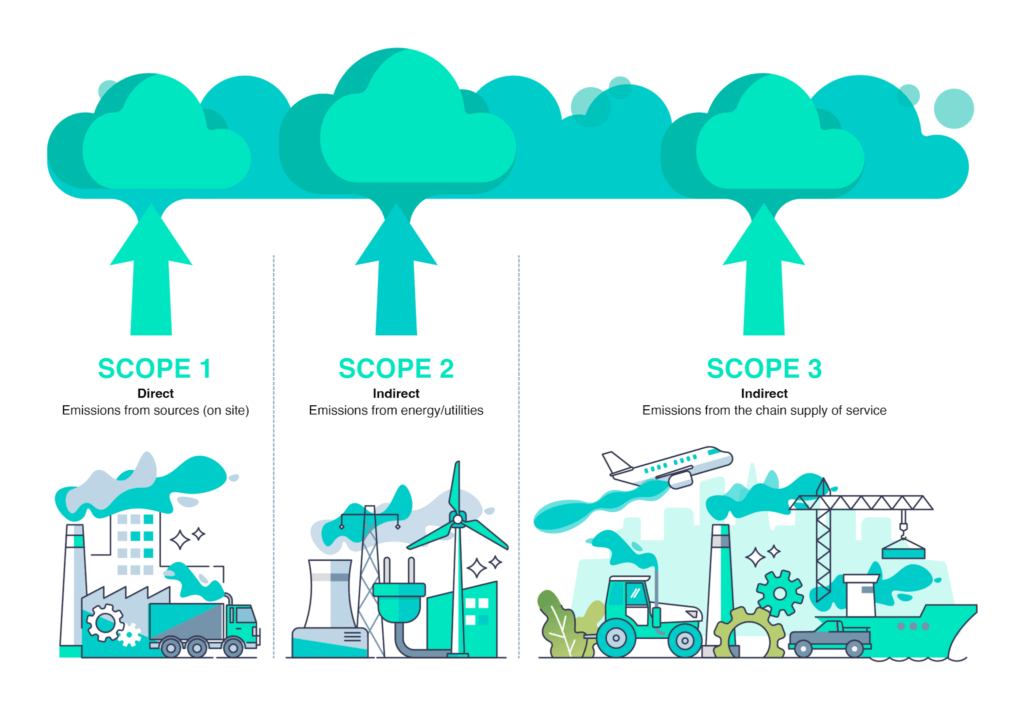
Unlike Scope 1 and 2 emissions—relating to direct operations and purchased energy—Scope 3 encompasses all other indirect emissions across an organisation’s value chain. These include transport, procurement, subcontractors, materials, and waste. It’s where the majority of emissions typically occur—and where the biggest challenges lie.

The Construction Sector Supports Digital Innovations in Construction Waste Tracking
The "FlowForma Construction Survey Results Report: Building the Foundations of the Future" (July 2022), published by the Construction Industry Federation (CIF), explores the impact of digital transformation and workflow automation on the construction sector. The report highlights how construction decision-makers are transitioning away from manual processes and adopting automated, data-driven solutions to enhance efficiency, reduce costs, and improve project outcomes.

How Hub360 Prevents Greenwashing in CSRD Reporting
As sustainability regulations tighten across Europe, the pressure on companies to back up their climate claims has never been greater. Under the Corporate Sustainability Reporting Directive (CSRD), organisations must disclose detailed, verifiable emissions data—including Scope 1, 2, and 3—with the same rigour as financial reporting.
Scope 3, Greenwashing, and the Coming Storm for Infrastructure Projects
Public infrastructure projects across Europe are entering a new phase—one defined not by voluntary ESG commitments but by legally enforceable carbon reporting requirements. At the centre of this shift is Scope 3 emissions: the indirect emissions generated by supply chains, transport, subcontractors, and material usage.
With the Corporate Sustainability Reporting Directive (CSRD) now in force and enforcement mechanisms ramping up across EU member states and the UK, organisations relying on estimates or static spreadsheets are on a collision course with regulation.

Advancing Circular Economy Practices in Construction: Insights from the Industry
The "Supporting the Circular Economy Transition in the Irish Construction Sector" report by the Construction Industry Federation (CIF) provides a roadmap for enhancing material reuse and recycling in the construction sector. Section 6.2: Strategies for Material Reuse and Recycling (Page 46) emphasises that embracing circular economy principles is vital for meeting Ireland’s 2030 waste reduction goals.
With construction and demolition (C&D) waste accounting for a significant proportion of Ireland’s waste stream, the CIF highlights the need for industry-wide adoption of material reuse and recycling strategies to drive sustainability and regulatory compliance.

Supporting County Councils in Meeting Ireland’s 2030 Construction Waste Targets with Hub360
Ireland is on a journey towards a circular economy, and the National Waste Management Plan for a Circular Economy 2024–2030 plays a crucial role in shaping this transformation. A major aspect of this plan is the implementation of robust monitoring and reporting mechanisms to track progress towards construction and demolition (C&D) waste reduction and recycling targets, ensuring transparency and accountability.
County councils across Ireland are tasked with executing these measures within their jurisdictions, working closely with national and EU regulatory bodies. These efforts are essential in driving Ireland’s construction waste management practices forward and aligning them with the highest environmental standards.

Urgent Action Needed: Ireland’s Low Circularity in Construction & Demolition Waste
Ireland has made significant strides in managing construction and demolition (C&D) waste, achieving an 82% recovery rate—exceeding the EU’s 70% target. However, a closer look at the figures reveals a critical issue: only 10% of this waste is recycled, with the vast majority directed towards backfilling. Additionally, while Ireland’s overall Circular Material Use Rate (CMUR) stands at a mere 1.8%, far below the EU average of 11.5%, the construction sector plays a crucial role in this deficit. The construction industry generated 32.6% of Ireland’s total waste in 2020, making it the largest contributor among all sectors. Yet, limited recycling and reuse efforts mean that valuable materials are not being reintegrated into the economy. This reliance on backfilling rather than recycling highlights a key area where improvement is necessary for Ireland to align with leading European countries in sustainable construction waste management.

Insights from CIF Report: The Role of Digital Tools in Construction Waste Management
The "Supporting the Circular Economy Transition in the Irish Construction Sector" report by the Construction Industry Federation (CIF) highlights the growing role of digital tools in waste tracking. Section 3.2: Digital Innovations in Waste Tracking (Page 28) emphasises how advanced technologies can revolutionise the way construction and demolition (C&D) waste is managed, ensuring compliance with Ireland’s 2030 circular economy targets.
As Ireland moves towards stricter waste management regulations, the integration of digital solutions is no longer optional—it is an essential strategy for tracking, optimising, and reporting waste in real time. Digital innovations enhance efficiency, reduce landfill dependency, and help construction firms meet regulatory obligations while cutting costs.

Strengthening Construction Waste Compliance Through Collaboration with Regulatory Bodies
As Ireland moves towards its 2030 waste reduction and circular economy goals, collaboration between construction industry stakeholders and regulatory agencies is becoming increasingly critical. Section 5.3 of the "Supporting the Circular Economy Transition in the Irish Construction Sector" report (Page 40) highlights the necessity of working closely with environmental authorities such as the Environmental Protection Agency (EPA) to improve compliance, transparency, and sustainability in construction waste management.

Future-Proofing Construction: How Data-Driven Waste Management Can Give Your Company a Competitive Edge in Public Sector Projects
Ireland’s public sector construction projects are evolving, with sustainability and environmental compliance becoming major factors in awarding contracts. With strict waste reduction targets set for 2030, construction firms collaborating with government agencies need to ensure their waste management practices align with national and EU directives.
For companies aiming to secure more public sector work, staying ahead of regulatory requirements and demonstrating a commitment to sustainable waste management is no longer optional—it’s a competitive advantage.

From Blacktop to Backlash: New Rules Demand Full Traceability of Road Waste
In its guidance, Transport Infrastructure Ireland (TII) reinforces a message that every local authority and roads engineer should take seriously:
Road planings must be tracked through their entire lifecycle.
As Ireland accelerates its shift toward a circular economy, public bodies are being held accountable not just for how roads are built—but for how materials are recovered, reused, and reported.
This isn’t just best practice. It’s becoming compliance.

Unlocking the Value of Site-Won Asphalt: A Smarter, More Sustainable Future for Road Maintenance
Site-won asphalt refers to asphalt that is carefully removed during road resurfacing or maintenance projects. Instead of discarding this valuable resource, it can be collected, processed, and reused—helping to create stronger roads, lower costs, and reduce environmental impact.